Sunday, September 14, 2014

Branding Opportunity Up-Tick For Hedge Fund Industry Marketers

2009-02-26-hedge-fund-managers As noted last week by WSJ reporter Andrew Ackerman, the hedge fund industry regulator aka CFTC has further eased restrictions on hedge fund advertising, a move that could spark an uptick in creative branding strategies within an industry long constrained by rules that could further promote their offerings.


The below opening lines of Ackerman’s story should be a call to action for HF managers who understand the need to better position their story within mediums that are known to resonate with your targeted audience. After all, the most successful and most respected firms in other parts of the financial industry have enjoyed outsized ROI by investing in cohesive and creative ad campaigns, as measured by a combination of garnered AUM and increased good will value.


“..Washington–U.S. commodity regulators took long-awaited steps to make it easier for hedge funds and other firms to raise cash by publicly advertising stakes in their funds.


The Commodity Futures Trading Commission late Tuesday eased long-standing marketing restrictions on so-called private offerings by hedge funds and other funds sold only to wealthy investors, a move aimed at aligning the CFTC’s restrictions with similar rules set by the Securities and Exchange Commission…


The bulk of the hedge-fund industry declined to take advantage of last year’s eased SEC rules, in part because many funds were still barred from public advertisements under separate CFTC rules that apply to funds that engage in derivatives trading, as many firms do. The CFTC’s move to ease those restrictions Tuesday and make them similar to the SEC’s comes after more than a year of lobbying by the hedge-fund industry.”


Jay Berkman, the principal of corporate marketing and brand strategy firm The JLC Group, whose clients include a number of financial industry firms, including global macro strategy firm Rareview Macro LLC, noted, “If I were managing a hedge fund, this would be the time I’d be tapping into firms that are creative, but also truly understand the industry landscape and the profile of the targeted audience. ” Added Berkman, “An expert that understands that it’s not about what you are selling, but about what your customers want to buy.”


The WSJ story is available by clicking this link (subscription might be required).


Branding Opportunity Up-Tick For Hedge Fund Industry Marketers

Sunday, August 03, 2014

Real Branding: Pictures Tell 1000 Words; Infographics 101; FB Selling Fish Oil

Today’s Sunday NYT Times featured a story profiling how Facebook advertising gurus are constructing an ad campaign to sell fish oil for MegaRed, a neutraceutical brand that is trying to break through the clutter within a product category that is literally swimming with products; the best take away from that story can be found in a comment courtesy of FB VP Eric Schnabel: “Great words with an image attached to them are the purest form of expression.”


Adds Schnabel: Story lines that stretch across multiple ads (ad gurus call this strategy “short-form narratives”), spread out over days or weeks, could also be very effective. “We try to make them more like ‘Law and Order’ than ‘Game of Thrones,’ ” Mr. Schnabel said. “You don’t need to see every episode in order for it to make sense.” But don’t overdo it, he warned. Ads that pop up too frequently feel like spam. Facebook itself generally aims to show one ad for every 20 items in a person’s news feed, although users who like or comment frequently on ads might see more.


In due respect to above-noted young turk, we don’t suggest that Schanbel has hit on new concept within the context of using images, he is simply regurgitating what every brand advocate should know; wisdom that we’ve espoused in this blog more than a few times during the past 8 years. That’s right, we’ve been evangelizing this notion for more than 15 minutes; most recently in our July 10 “blog post”. 


imgadTo illustrate this simple observation with just one example, in 2009, while representing a consumer product company that sought to create awareness about hand hygiene and their alcohol-free hand sanitizer, we ran the adjacent photo image in a Google ad campaign..During the first 36 hours, the ad inspired 10,000 (that’s right, Ten Thousand) click thru’s, converting into more than 1000 orders for the company’s products.


Yes, we do push the envelope when advocating clients’ brand messages. We also pound clients’ tables (and every so often, we’ve had to ceremoniously knock their heads against a wall) to drive home this critical approach to branding in a world where images have become the greatest influencers. How/why else can one explain the success of Pinterest, Instagram and of course, Facebook (among others)? How else can one explain the dramatic shift by brand marketers to mobile device advertising, a format that only “sticks” when images are the primary element?


Because it works.


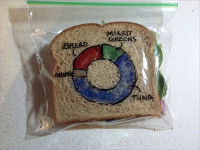
sandwich-pie-chartAnd before signing off to sun on the beach on this sunny day, this update wouldn’t be complete without making reference to the use of infographics–an approach that uses minimal words within a message dominated by a visual element. We touched on this topic in the July 10 post, but we’re compelled to grab it and shake it some more, this time with a shout out to infogr.am, one of several online sites that help marketers create a variety of informative presentations that leverage the impact of images.


Real Branding: Pictures Tell 1000 Words; Infographics 101; FB Selling Fish Oil

Tuesday, July 29, 2014

#Chatvertising: Native Content Gets a Kick from #Kik; Talk To The Bot

Kudos to WSJ’s Christopher Mims and his recent article (in which he claims to have coined a phrase that, even if its been around for at least 15 years, will undoubtedly now become ubiquitous across the corporate advertising and brand marketing universe in less time than it might take to craft a wily tweet.


First, in due respect to Christopher–if you’re reading this, you’d want to open a browser and insert the phrase “chatvertising” before you endeavor to secure a trademark or a patent. I found this definition posted to web in 2000:


The act of promoting a company, etc., by insinuating its name and/or press-release-like statements into casual online chats, discussion-groups, nodes, and the like. My employer, Immortals Inc., after a recent merger with MegaSuperCorp, announced Friday it will be launching a multi-billion-dollar chatvertising PR campaign.


But, lets not split hairs when it comes to PR industry IP; the most recent reference by WSJ’s Mims is profiling a more contemporary application: the one in which instant message communication between brand advocates and customers is actually taking place between brand-hosted “bots” (for you “newbies”, bots are merely software-contrived creatures from the world of artificial intelligence) and customers or brand fans who like to think they are engaging in a conversation with a real person. Or maybe, those who use applications such as Kik (akin to the currently more popular “WhatsApp”) are finding the computer-driven dialogue more comforting than having to communicate with a human. When considering the decline of customer service that has permeated online and brick and mortar companies, who can blame anyone for preferring to exchange dialogue with a robot?


Here’s an excerpt from Mims’ column in the WSJ (my footnotes follow accordingly):


kik“…Simply spamming users with ads in such an intimate space won’t work. Part of the problem is that until now, it hasn’t been clear what a “native” advertisement in a chat app looks like. Yet in the first week of offering its “promoted” chats, 1.5 million people opted in to one of the campaigns, according to a Kik representative. And Kik’s own chat bot, which began as an experiment and has been running for years, gets 1.8 million messages a day.


If it seems improbable that so many teens—80% of Kik’s users are under 22—would want to talk to a robot, consider what the creator of an award-winning, Web-accessible chat bot named Mitsuku told an interviewer in 2013.


“What keeps me going is when I get emails or comments in the chat-logs from people telling me how Mitsuku has helped them with a situation whether it was dating advice, being bullied at school, coping with illness or even advice about job interviews. I also get many elderly people who talk to her for companionship.”


Any advertiser who doesn’t sit bolt upright after reading that doesn’t understand the dark art of manipulation on which their craft depends.


Chat bots built by brands can be used for entertainment, but they can also be used to inform; imagine conversing with your bank or utility company’s bot when you have a customer-service question. And the ones Kik is working on can learn, says Mr. Livingston….”


The premise of course, is that artificial intelligence will continue to evolve exponentially; a valid and well-documented thesis. In the case of Kik (as in many other AI apps), the goal is to create a dynamic application that is continuously “self-learning”…so that with each interaction, the robot on the other end of the line becomes increasingly more intuitive and its responses ultimately become indecipherable from the responses one would expect from a human being.  Bringing me to a new phrase that I’ll hereby and happily hypothecate to Chris: ” human beens”…aka HBs…definition: something that was once human.


For those who remember 2001: A Space Odyssey, the article by Mims is an intriguing update:


#Chatvertising: Native Content Gets a Kick from #Kik; Talk To The Bot

WFDs: News Media Now Nothing More Than Social Media? Ready, Fire, Aim

Thought Leadership rhetorical question of the day: Has the so-called “Fourth Estate” completely lost its ethical compass when it comes to reporting? Let the latest events in Gaza be the guide to irresponsible journalism. Let it also inspire corporate advertisers to think hard about which networks they are willing to enrich.


While blogging and tweeting has necessarily transformed the manner in which “news”  (as well as corporate brand messaging) is distributed, this frequent blogger and consummate consumer of all kinds of news is compelled to proffer the notion that many members of the 4th Estate–including those who claim to run “global news organizations” have caused this viewer to turn the channel at every chance, and go straight to the cartoon network. There is simply no credibility and no integrity remaining when so-called journalists prefer to fire first via Twitter, the new weapon of fact destruction–which we hereby claim credit for labeling “WFDs.”


The fact that news organizations such as CNN, NBC, ABC, along with leading print publications and their respective cable and online platforms have succumbed to reporting before fact checking is hardly news to anyone. That said, when CNN and NBC (among others) continuously flash “breaking news update” across their screens–and distill nonsense headlines and out of context images attributed to their embedded reporters, who are tweeting from the streets of Gaza with completely undocumented, unverified and uncorroborated statements such as “Israeli military have just bombed a UN school killing scores of children”…or “..Israeli forces are now indiscriminately firing upon civilian sites, including hospitals and religious centers in Gaza..we can see and hear the bombs landing from where we are in our hotel…” …that’s the time when we can all kiss goodbye the concept of fair and balanced reporting….


Before ranting further, this writer needs to make it clear: There is no question that the Palestinian people deserve and are entitled to a country they can call their own, and one that allows them to peaceably pursue a democratic existence…one that allows its citizens to express their opinions freely (but peacefully), to pursue trade with other law abiding governments, and one that fosters education and the opportunity to pursue opportunities.


The leaders of Israel, whether they are opposing political leaders from different parties or military leaders from various divisions all agree on this basic principal. Anyone who thinks otherwise has simply failed to pay attention to the consistent message and consistent actions taken by Israel’s government towards supporting a pro-Palestinian initiative. This is not to suggest that Israel supports a role that Hamas could play in any such initiative. Hamas, whose ancestors originated in the Syrian city of Hama and were almost completely wiped out by the prior Syrian president in retaliation against the so-called Islamic Brotherood, has publicly decried the Jewish State and has consistently championed the destruction of Israel…and of course, any country that supports Israel’s right to exist.


The challenge faced by many Palestinians in Gaza is the lack of any [democratic] governmental foundation, lack of real education, lack of resources, as well as the fact that factions within the Islamic community have been fighting each other for hundreds of years. Arab nations are notorious for heavy-handed dictators, and truth be told, Western nations, as well as Russia have otherwise supported those governments simply because those heavy hands have kept the storm of Islamic fundamentalism aka terrorism, from knocking down every house and hut in their respective countries.  For those who believe the Arab Spring was a saving grace for those seeking democracy, stare at any headline from almost any news outlet and you’ll be reminded that each of those countries are suffering from greater infighting, greater violence..all of which can be attributed to groups such as Hamas–who only know from terror tactics. There is a solution to all of this..albeit collectively smart minds who advocate a peaceful resolution in which everyone could live as neighbors without fear of being bombed at a moment’s notice have been unable to introduce the notion of reason to a discussion with people who have consistently proven they have no desire to be reasonable.


To clarify, after hours in which both CNN and NBC affiliates continued to claim that Israel was responsible for firing missiles into the UN compound this past weekend, it turned out that it wasn’t really Israeli missiles, but errant missiles launched by members of Hamas. Did CNN or NBC run a correction or apologize for miscasting the reports? Did they acknowledge they had no corroboration as to where those missiles came from and misreported? No.


On the topic of Israeli military “firing indiscriminately”..the exact words tweeted by both CNN and NBC “embedded” reporters, let’s set the record straight: not only are statements such as that completely irresponsible, they are completely false. The reporters are almost as dumb-headed as the millions of viewers who believe that journalists actually check their facts before blasting them in what has become the ubiquitous news media tactic: the “Ready, Fire, Aim” approach.


Shame on them (the news media) for pursuing a race to the “breaking news scoreboard” in order to beat out other networks in the quest to become the most provocative and logically, the most-watched…in turn making them the favorite of corporate advertisers. Now that I’ve said that, shame on any advertiser for fueling the madness and underwriting what they thought was responsible news content.


WFDs: News Media Now Nothing More Than Social Media? Ready, Fire, Aim

Sunday, July 13, 2014

A Message From The Middle-East; Out of The Mouth of Babes


Below is an email forwarded to me last night by my uniquely objective and non-political 28 yr old daughter. As prefaced by my daughter, the sender is a young lady, and a member of the Israeli Army, who my daughter met and since bonded with while my daughter participated in a Birth Right Israel trip 2 years ago.


Allow me to caveat by saying: For those who may be easily disturbed and influenced by the news media’s reporting of the recent events taking place in Gaza, including the calculated exploitation of eye-grabbing photo and video images of innocent Palestinian citizens killed and injured in Gaza consequent to retaliatory attacks by Israeli military [in effort to target terrorists who are launching hundreds of missiles into Israel's main cities], the thoughts and comments expressed by my daughter’s friend provides a stark, real-world insight to the realities of what is taking place. Nobody who claims to understand the difference between moral and ethical right and wrong, and nobody who claims to be educated beyond elementary school with respect to world history should be confused by the news media’s reporting of what is really happening right now.


[Personal note] Notwithstanding what seems to be a never-ending series of global conflicts, many of which taking place in the mid-east regions and our country’s growing weariness to become involved in these events, nobody should be confused as what is taking place in the Gaza region and our individual and our country’s obligation to vigorously and proactively stand by a citizenry whose multi-generational legacy [extending back thousands of years], is based on and dedicated to the exact same principles that inspired the founding of our own nation: insuring freedom, democracy and pursuit of peace; particularly when it comes to their defending the preservation of their culture and the right to exist as a peaceful nation that seeks to improve the well-being of our global community, not just their own.


Forward or ‘post’ to your favorite social media network as you see fit..The message could make a positive difference.


Dad–This is a note from the soldier I met on Birthright who wants to become a speech pathologist too! We became good friends on the trip!


Hello you all my friends overseas,


We might have not spoken in years but in the last few days I felt like I needed to write to all of you people I met along my trips and exchanges. I live in Israel in a city called Rishon Lezion not so far from Tel-aviv and half an hour drive from Jerusalem. In the past few days I found myself having 15 seconds to run to the nearest shelter every time I hear the siren goes on. It has already caught me in my sleep at night, while taking a shower and even while driving my car when there was no near place to run to in order to hide. It looks pretty much like this (I hope you’ll be able to open it):


https://www.facebook.com/StandWithUs/photos/a.350931762688.151625.19459912688/10152230662107689/?type=1&theater


My country is being bombed by an organization you probably heard of called Hamas – a terror organization which took over the Gaza strip and uses its civilians as a human shield. This terror organization is firing rockets from schools, hospitals and mosques in Gaza towards most of the populated areas of Israel, which of course makes it harder for us, Israelis, to fight back where civilians can get hurt and for them an easy way to look good on camera showing horrifying photos of death and getting international support.  (btw: a lot of the photos are being taken from the poor situation in Syria, you can watch this BBC video: https://www.youtube.com/watch?v=XnO4gy8dQIc )


Few minutes ago the siren went on and a rocket fell in my neighbor’s back yard. I was of course hiding with my family and scared dog in the shelter and I’m safe now. The reason I’m writing to you is because I am well aware of the media taking sides in this conflict for whatever interest there is, and its influence on the people watching it.


As the only Jewish state in the world and a country which is being bombed on a regular base by Hamas we have no choice but to defend ourselves and fight this terror.Here is a short video by the CNN that can maybe explain more for those who are interested: 


https://www.youtube.com/watch?v=C_FtkFqFV3o


For those who want to know more about the conflict in the Middle East you can check out this as well: https://www.youtube.com/watch?v=8EDW88CBo-8&feature=youtu.be


All I wish for is for you, the people I can reach, not to be misled and to understand the situation of this war from the eyes of those who live it.


I wish for us all peace and tranquility


A Message From The Middle-East; Out of The Mouth of Babes

Friday, July 11, 2014

Corporate Crisis Management and Public Relations; Get in Front of It or Get Run Over By It

aka Corporate Branding and Crisis Management: Be In Front or Get Run Over


A crisis only becomes a crisis when corporate executives (including political leaders, government agency officials, etc) fail to confront and publicly address an incident before any one else makes mention of it.


According to Jay Berkman of brand positioning firm The JLC Group, “Those who recognize they made a big whopper of a mistake (or one that was made by someone within their organization) and take proactive steps to both correct it and inform their constituents accordingly will never have need for a crisis manager, at least not within the context of a public relations crisis manager.


In simpler terms, corporate brand marketing and crisis management should only merge into the same discussion when managers fail to  get in front of the issue. Those who don’t will inevitably get run over by it.


Corporate Crisis Management and Public Relations; Get in Front of It or Get Run Over By It

Thursday, July 10, 2014

A picture speaks a thousand words

Isn’t it curious that people manage to watch three movies in a day but cringe at the idea of reading through an equally interesting book in a week? It’s relatively simple. A majority of people prefer visual material for informative purposes, not just for entertainment. Studies show that the brain stores visual information more quickly as compared to written information.


It’s biological. People prefer eye candies; something that stimulate thought processes and are fun to look at. One can effortlessly comprehend patterns, shapes and colors – and therefore charts, graphs and infographics.


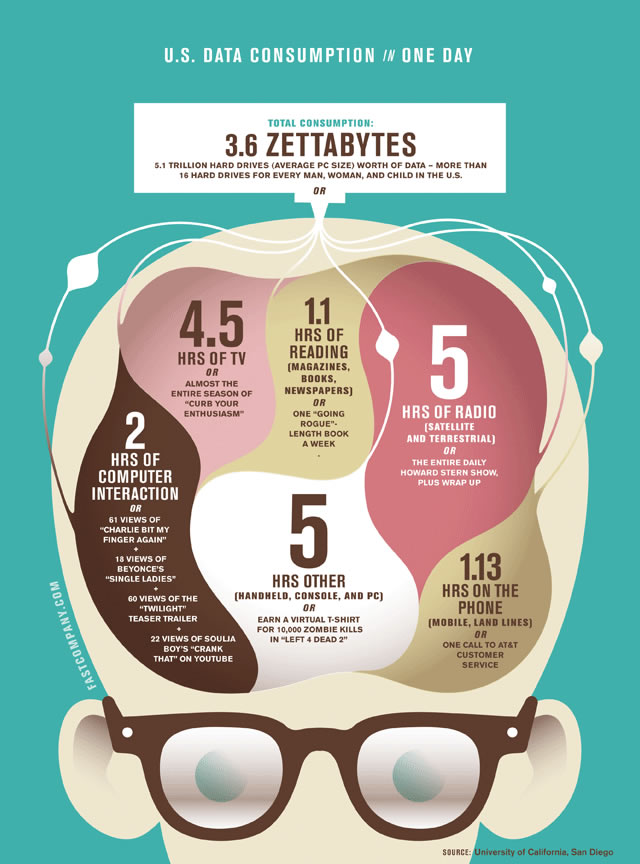
infographic_02


If you wish to convey your message in an attractive and impactful way, you must make use of images to turn data into an easily digestible, bite sized chunks. Great user experience is a product of creative visual illustrations. There are a number of free tools available to make this happen. Following are three ways to gain more traffic to your website, blogs or presentations by making them more visually attractive.


1. Infographics


Inforgrapics is raw data that has been converted into something people would like to see. It compresses complex ideas in a visual to form to make it quickly and easily understandable to the target audience. Inforgraphics utilized three elements to convey complicated information. Text, statistics/data and visuals.


(Here’s a cool infographic about infographics.)


Infograpics are not just visual eye candies designed to relay information, they are created in a way that appeals to user and increases the sharebility of that information on social media.


Apps to help you get started: Visme is a cool free tool for creating beautiful infographics. Prezi can also be used to create cool presentations.


2. Videos


Videos are a great way to compress information for your clients. The uses range from preparing a demo of a product, corporate communications to entertainment videos. Statistics reveal that an individual watches 186 videos per month, from all sectors of the industry ranging from educational videos to entertainment channels.


Videos deliver your message effortlessly and tend to engage the audience in ways that an image or infographic just cannot. Quite a lot of companies have failed to follow the trend in their marketing endeavors. Its imperative not to get left behind in such basics as they are building blocks that make you stand out from the competition.


Apps to help you get started: Start with free tools like Animoto and Masher.


3. Heat Maps


Heat maps are visual aids that numeric information in the forms of color patterns. The colors indicate the various levels of the data such as distance, weight or height. A fine example would be the ability to track the clicks on your website, such as which particular page or feature users click on the most. Such data helps you isolate the elements on the website that aren’t getting as much attention. This helps in taking measures to change that buy utilizing a different strategy.


Apps to help you get started: Some tools to experiment with are Crazy Egg, Click Heats, and Clicktale.


A trend has set in present information in a visual format. Online users demand web pages that appeals to them, and anything that is not interesting is not tolerated. Your competition is already doing it to get maximum eyeballs on their web presence, which leaves you with two choices go visual or get left behind.


A picture speaks a thousand words

Sunday, July 06, 2014

Twitter: A Weapon Of Brand Destruction for Companies (Like "Conn's") Who Eschew Corporate Communications (and all else) re Customer Complaints

For those who don’t religiously read the Sunday New York Times column “The Haggler”..investigative reporter David Segal’s piece in this weekend’s decision is a barn burner. For any brand marketer, today’s profile detailing The Haggler’s attempt to resolve a customer’s complaint and running into a proverbial corporate communication brick wall created by Texas-based appliance chain store “Conn’s” is a classic example of how to inspire the wrath of masses using weapons of brand mass destruction aka Twitter by tweeting and calling out wrong-doers…The story is also likely to lead to a massive problem for this particular retailer, one who has faced the wrath of state regulators in the past.


Segal, who is generally quite successful in the course of getting to the bottom of things on behalf of consumers who encounter frustrating experiences with select companies, has apparently rolled snake eyes in his efforts to communicate with senior management of this not-so-small chain of electronic gadgets and home appliances. His solution? Inspire (some would use the phrase “incite”) readers to tweet the company via @connsinc in an effort to form a community-centric campaign designed to deliver a message to the company that their customer service is less than acceptable and to appeal to whatever sense of obligation this company might have towards satisfying the people who butter their bread.


Segal, sitting in his bully pulpit as the arbiter of proper corporate behavior and customer service goes two steps further by suggesting readers to email the CEO’s executive assistant via angela.lagrone@conns.com or phone her office phone 936.230.5879 to express your support for Grace Salako-Smith, Ph.D, the Conn’s customer who has repeatedly attempted to communicate with this company in connection with a warranty that the company has apparently failed to honor. Worth noting, Conn’s has been the subject of literally thousands of consumer complaints and in 2009, agreed to pay $4.5million to settle charges of unfair business practices. Since that settlement, the company has received yet another 1000 complaints from consumers.


Twitter: A Weapon Of Brand Destruction for Companies (Like "Conn's") Who Eschew Corporate Communications (and all else) re Customer Complaints

Thursday, July 03, 2014

NDA (Non-Disclosure Agreement): To Have Or Not To Have: That is the Question

When aspiring start-ups (or fast-growth companies) set out to secure funding and further cement their brand, many entrepreneurs believe that any conversation requires first securing a non-disclosure agreement aka NDA before sharing their pitch—whether with a prospective investor, a vendor or even a next-door neighbor.


Throughout my own 25+ years, during which I’ve been a public company CEO, as well as an advisor to venture capital and private equity firms, I’ve been asked to review proposals from dozens of companies extending across a broad spectrum of industries (notably, many were technology-centric). I’ve also sat on the other side of the table while serving as a principal stakeholder representing a variety of entrepreneurial initiatives. Inevitably, the topic of executing an NDA was the first talking point—one that I vehemently eschewed.


My view has always been “ideas are great, but the ability to innovate supersedes any argument that a non-disclosure agreement is a requisite to a productive discussion.” My position has always been that imposing an NDA before even engaging in a preliminary discussion is superfluous. If someone wants to try and steal an idea, an NDA isn’t going to stop them. In fact, what often stops (and always slows) a conversation before it starts is haggling over the terms of an agreement that is terribly difficult and terribly expensive to enforce. What will stop them is the inability to execute (aka innovate). That’s always where the rubber meets the road.


Lo and behold, Eileen Zimmerman of the NY Times profiled this exact topic in a strong article in today’s edition within the Small Business section. Here are some excerpts from Eileen’s article:


It is a common quandary, and not just in Silicon Valley. Ten years ago, it was not unusual for entrepreneurs to request and potential investors to sign nondisclosure agreements. But today the agreements are largely considered a thing of the past. In fact, some investors say they walk away from a founder who even suggests signing one.


Thom Ruhe, vice president for entrepreneurship at the Kauffman Foundation, said the declining use of N.D.A.s “is certainly not in the interests of entrepreneurs. It favors the V.C.” Although it is rare that an investor steals an idea, Mr. Ruhe said, it does happen. “But in the skewed echo chamber of the Valley, and the sycophantical networks that aspire to be just like them,” he said, “they’ve made the easier and less morally defensible position — no N.D.A.s — the coin of the realm.”


Even if a start-up manages to get an agreement signed, it can be tough to enforce, said Aaron I. Messing, a lawyer with OlenderFeldman in Summit, N.J. “It’s very hard to prove that you kept information confidential, and it was only disclosed under an N.D.A.,” said Mr. Messing, who represents both founders and investors. “And it can be expensive.”


Below are some guidelines to consider. They apply when engaging not just investors, but also manufacturers, partners and even customers.


DO NOT ASK UNLESS YOU HAVE SOMETHING TO PROTECT. Chris Schultz, an entrepreneur and partner in the angel investment fund Voodoo Ventures in New Orleans, said: “Everyone thinks their idea is extremely unique, but the idea is really 1 percent of the value. The value is in the execution.”


KNOW YOUR AUDIENCE. Before making a pitch, research the background of your audience. “Think through who you are sharing your ideas with,” said Patrick Riley, head of Global Accelerator Network, a group of 50 start-up accelerators worldwide. Mr. Messing advised making sure an investor did not have potential conflicts or overlapping investments. Reputable investors, he said, “have much to lose by stealing your idea.”


CONSIDER FILING FOR A PROVISIONAL PATENT. C. Andrew Keisner, a lawyer with Davis & Gilbert in New York City who regularly counsels investors and start-ups, said the reluctance to sign N.D.A.s was one factor driving start-ups toward patent protection. “If you’re far enough along that you’ve developed an app or a prototype, there is a big advantage to filing a provisional application,” he said.


PROCEED GRADUALLY. When discussing a start-up, founders should walk a fine line, conveying sufficient information about what is unique and proprietary, but not disclosing information that would let someone replicate the business. For example, said Mr. Messing, the lawyer, an entrepreneur could disclose “what an algorithm can do, but not the algorithm itself.”


For the full article from the NY Times, please click here.


NDA (Non-Disclosure Agreement): To Have Or Not To Have: That is the Question

Wednesday, July 02, 2014

Microsoft rumored to be planning to replace 'Surface' branding with 'Lumia'

brandingThe content below is extract from the Mary Jo Foley’s blog article published at zdnet.com on June 28, 2014. She is an author of Microsoft 2.0 and she is covering various publications of tech-industry for more than 25 years.


The summary of this article illustrates, how it would help or hurt Microsoft more if the company consolidated its mobile branding using the ‘Nokia’ and ‘Lumia’ brands instead of using the current ‘Surface’ branding?


Mary states:


Branding is hard. Branding is expensive.


And changing brands mid-stream is hard, expensive and sometimes (often?) ill-advised.


But according to known leaker @evleaks, Microsoft may be doing just that. According to his unnamed sources, Microsoft may be moving toward rebranding its Surface tablets as “Lumia” devices.


@evleaks also claimed that Microsoft may be negotiating to keep the Nokia brand longer than originally planned so that it can use it for future phones and possibly other devices.


Earlier this month, @evleaks published what looked to be some kind of Microsoft “technical branding” guidance document, which indicated that Microsoft planned to phase-out Nokia branding on a very specific schedule: 18 months post close of the Microsoft acquisition of the Nokia handset business for Lumia devices; through December 31, 2015 for Nokia X Android phones; and 10 years for Asha mobile phones. (From the way that planning document is phrased, I would guess it predated the close of the Microsoft acquisition of Nokia’s handset business in April 2014.)


I don’t have any first- or even second-hand information about these branding rumors. I’ve asked Microsoft but am not expecting any kind of comment.


I will note that Microsoft has spent a lot to land the Surface brand ever since officials decided to use it to refer to Microsoft’s mobile tablet family, rather than its large-screen tabletop devices. The company is continuing to advertise the new Surface Pro 3 massively on TV during the World Cup 2014.


However, the Nokia and Lumia brands have stronger recognition outside the U.S. than they do here. And Microsoft is doing better selling Windows Phones outside the U.S. than here in the States.


Consolidating the Surface and Lumia brands would fit in with the company’s “One Microsoft” messaging and positioning. And with Windows Threshold, the next major version of Windows due in spring 2015, Microsoft is expected to launch a single Windows SKU that will work on both phones and touch tablets. Would it be easier to land that unified message if the phones and tablets were all under the Nokia/Lumia brand? Possibly…


Click here to read full article


Microsoft rumored to be planning to replace 'Surface' branding with 'Lumia'

Tuesday, July 01, 2014

Creating Awareness Via Email NewsLetters: Works Better Than Ever

Below is courtesy of a special column from this week’s NY Times written by Media Equation’s David Carr.  His insight struck a confirming chord here at The JLC Group when considering our firm’s role providing guidance to several newsletter publishers, including our most recent client, Rareview Macro LLC and that firm’s product “Sight Beyond Sight”


Per Carr:


Email newsletters, an old-school artifact of the web that was supposed to die along with dial-up connections, are not only still around, but very much on the march.


In addition to the long-running morning must-haves like Mike Allen’s political tip sheet Playbook, other topics and approaches are gaining momentum across publishing. Quartz, Atlantic Media’s smart business site, has an increasingly popular daily newsletter. The revamped Newsweek has done well with Today in Tabs, a cheeky look at content that is so bad it’s good. And webby writers including Ann Friedman, Jason Hirschhorn, Alexis Madrigal, Robin Sloan and Maria Popova all put out much-followed newsletters.


Bloomberg, Fast Company, The New York Times, Politico and many other news organizations are finding that they can grab attention — and readers — in the inbox.


How can that be? With social media, mobile apps and dynamic websites that practically stalk the reader, how can something that sometimes gets caught in a spam filter really be taking off?


Newsletters are clicking because readers have grown tired of the endless stream of information on the Internet, and having something finite and recognizable show up in your inbox can impose order on all that chaos. In fact, the comeback of email newsletters has been covered in Fast Company, The Atlantic and Medium, but I missed those articles because, really, who can keep up with a never-ending scroll of new developments? That’s where email newsletters, with their aggregation and summaries, come in. Some are email only, others reprise something that can be found on the web. At a time when lots of news and information is whizzing by online, email newsletters — some free, some not — help us figure out what’s worth paying attention to.


For the full column from The New York Times, please click here.


Creating Awareness Via Email NewsLetters: Works Better Than Ever

Friday, June 20, 2014

Your Website Face-Lift; Strategic Planning and Pre-launch Check List

Strategic planning is the key to business success as it involves deep thought behind setting vision, mission statement and out-of-the-box thinking. This philosophy is particularly relevant for any business that is now planning a face-lift of existing company website so as to remain relevant and current within the framework of contemporary brand-enhancement strategies.


•    Review Previous Project Analysis


Before moving on to a new project, review of previous project analysis will generate valuable insight when calculating all of the pros and cons of the previous project. The strategic planning of a new project depends upon the review of previous project analysis. Real experts learn from previous mistakes and formulate strategies that overcome the shortcomings of prior resources used, and other weaknesses or errors in the course of moving to new project planning.


•    Brand Strategy Planning


Brand strategy planning is a planning of brand identity, company image and the value proposition that you want to convey to your target market.  Our business strategy planners think big and provide insight to your business planning and current needs from a professional view point. We aim to create bigger and better ideas for the aspiring brand names.


220_F_55192078_c5l9Tyu3KzvIjVLDnGzwKelJpUxvDwlg


•    Website Pre-Launch Check List


While elementary and obvious to many clients, this pre-launched website checklist critical to use as benchmark when working with website designers and developers.


-    Check for Favicon


-    Cross Browser Testing


-    Cross operating system compatibility


-    Removing Borders for Links and Images


-    Set up 404 page


-    Loading time (Downtime & Server Speed)


-    Setting up 301 redirects if needed


-    Set up Web Analytics


-    Set up Google Webmaster


-    Check for broken links


-    Proofread all the content – Spell Check!


-    Check all links on header footer and body


-    Functionality Check


-    HTML Validation through w3c.org (Remove all warnings and Errors)


-    Copyright statement


-    Disclaimer


-    Meta Information of all pages (Title, Keywords, and Description)


-    HTML Sitemap


-    XML Sitemap


-    Robot.txt


-    URL optimization


-    Develop Newsletter (campaign for opt-in subscribers)


-    Social icons links to your social platforms (Facebook, Twitter, LinkedIn, G+, etc.)


-    RSS Feed


Your Website Face-Lift; Strategic Planning and Pre-launch Check List

Wednesday, June 18, 2014

“Why Does Your Brand Exist? The 4 P’s Test for branding strategy

Thanks to Jennie Wong, for sharing this week’s interview of “Ask The Mompreneur” with Jaun Garzon, a marketing strategist. In her recent article “What is your firm’s branding strategy?” She discussed what the brand is and what is branding strategy? As explained by Mr.Jaun Garzon in an interview.


To help entrepreneurs and small businesses better understand the core of their brand and branding strategies, I use a system I developed called the 4 P’s of Branding. It boils down this hidden part of your brand into 4 aspects: your purpose, your promise, your personality and your positioning. By asking yourself these questions (in this order), you’ll be well on your way to understanding what your brand is all about.


Purpose:


Why does your company, whether you are 1 or 100 employees, exist? Why do you get up every morning and do what you do? Why did you start this business to begin with? Your purpose is about connecting your business to its “Why?” and ensuring that the branding decisions you make support because doing what you do, including putting it out for the world to see. For example, Southwest Airlines states their purpose right on their website, “To connect people to what’s important in their lives through friendly, reliable and low-cost air travel.” Whatever that reason is for you, that’s the foundation of your brand.


Promise:


It is imperative to know your target market and communicate such things you guarantee always to do for them (in your promotions, social awareness, sales brochures, etc.). Such guarantee may include pace, quality, attention to detail or any high-level benefit you can constantly offer. The goal is, customers should realize that if they opt to work with your company, you will stick to certain promises and can do everything to make it achievable. This promise is ultimately responsible for brand reputation.


Personality:


Brand personality depicts the personality of users consuming it. Brand personality can be feminine or masculine. For example, to get you the meaning of different brand personalities, think about two different motorcycle brands, Honda and Harley Davidson. You would unlikely to confuse the two, even though they both are motorcycle brands. Honda bikes are mostly used by low-mid income class individuals or young small families. It reflects affordability and fuel-efficient features. While, Harley Davidson is usually own by well off individuals who are never worried about fuel-efficiency and affordable cost. What most matters for Harley user are uniqueness, prestige and competition from peers.


Harley-Davidson-Best-HD-Wallpaper-Desktop


Positioning:


Your customers are might be aware of products or services you are selling, but not necessarily aware of why particular product or service is valuable for them or how certain offering may add value in their lifestyle. Here brand positioning strategy works to divide the market into segment and sub-segments. You have to clearly define your brand through advertising and promotional efforts. For instance, Volvo and Mercedes are both higher-end cars, but Mercedes is all about prestige and quality whereas Volvo has positioned its brand as the safest cars in the world.


There are numerous strategies floating in the market to make your product a BRAND, but these 4 simple P’s of branding strategy could help you define the scope and purpose of your brand. If there is any anonymity between your brand and 4 P’s then you must to revamp your strategies.


“Why Does Your Brand Exist? The 4 P’s Test for branding strategy

Tuesday, June 17, 2014

Case Study for Corporate Marketers, Bankers, Branding Gurus and PR Positers: Skybox Inc

Skybox Imaging Inc. Team Skybox Imaging Inc. Team


How to differentiate your disruptive and innovative company from the rest? Have your chief cheerleader (presumably your CEO) make an epic statement in which your entire company and your constituents can continuously hang their hats on..  The following is a classic example:


“We think we are going to fundamentally change humanity’s understanding of the economic landscape on a daily basis.” Skybox co-founder Dan Berkenstock


The above words from an entrepreneur whose offering is seemingly perceived to be something simple: satellite technology.


If you are an aspiring tech czar in the capital raising mode, a brand enhancement specialist, a venture capitalist doing due dili, or a mere investment banker who is working with an advanced-stage company whose execs are also looking to you to help ‘craft the value proposition” to investors, your target audience will always be more inspired when you perspire passion to the point where its dripping from your pores.


The context of the above quote is in connection with a very compelling piece written by WSJ reporter Christopher Mims in his aptly-titled column “KEYWORDS”


Below are select extracts from the June 16 WSJ article: The story itself is not merely about enterprise valuation techniques and not only about the next great technology innovation, the story transcends borders for those who can read in between the lines..


Silicon Valley lately has seemed like the land of wild—or at least puzzling—valuations.


Facebook bought WhatsApp, a messaging service with paltry revenue and at least a half-dozen sophisticated competitors, for $19 billion. Uber was just valued at $18.2 billion in a round of private-equity financing. Even Beats Electronics, a company with a music service in its infancy and technologically inferior headphones that could fall out of fashion at any moment, was valued at $3.2 billion to Apple.


But Google just bought a company that could have a bigger impact on its bottom line and on the world than any other recent acquisition by the search giant or its tech brethren—for just $500 million.


For 1/38th the price of WhatsApp, Google acquired Skybox Imaging, which puts satellites into orbit 185 miles above Earth on the tip of the same Russian missiles that once threatened the U.S. with nuclear destruction. And here’s what Skybox could allow Google to accomplish: Within a couple of years, when you want to know whether you left your porch light on or if your teenager borrowed the car you forbade her to drive, you might check Google Maps.


That’s because by 2016 or so, Skybox will be able to take full images of the Earth twice a day, at a resolution that until last week was illegal to sell commercially—all with just a half-dozen satellites. By the time its entire fleet of 24 satellites has launched in 2018, Skybox will be imaging the entire Earth at a resolution sufficient to capture, for example, real-time video of cars driving down the highway. And it will be doing it three times a day.


And yet, as I discovered when I visited Skybox recently at its modest, low-slung headquarters in Mountain View, Calif., satellite imagery isn’t even the business in which the company’s founders see themselves. As at Google, the business of Skybox isn’t data, but knowledge.


“We think we are going to fundamentally change humanity’s understanding of the economic landscape on a daily basis,” says co-founder Dan Berkenstock.


Here’s an example of what he’s talking about. In 2010, an analyst at UBS discovered that if he bought satellite images of parking lots of Wal-Mart stores, he could predict the company’s sales figures before they were revealed in its quarterly report, because cars in lots equal shoppers in stores.


“We’re looking at Foxconn every week,” Mr. Berkenstock says, because measuring the density of trucks outside the Taiwanese company’s manufacturing facilities tells Skybox when the next iPhone will be released.


Skybox can determine how much oil is being pumped out of the ground in Saudi Arabia by imaging oil-storage tanks from above. The company can peg the likely price of grain months in advance by measuring the health of every square yard of cropland on Earth. One city has used Skybox’s data to determine who built illegal backyard pools and might use it to identify water-restriction violators during a drought.


It’s competitive intelligence as spy craft. And it’s compelling enough that a Skybox employee once told a reporter for Wired that the company might someday simply become an unreasonably profitable hedge fund.


Yet these known uses of satellite data—which have never been available in the abundance that Skybox says it can achieve—are just the beginning. It’s the unpredictable applications that could be the biggest.


If Google can get a cut of those services by charging a licensing fee for the underlying data, it could be a new business that might move the needle on Google’s revenue mix, which, ample as it is, remains stubbornly linked to search advertising.


Case Study for Corporate Marketers, Bankers, Branding Gurus and PR Positers: Skybox Inc

Monday, June 16, 2014

6 Rules for New Brands Seeking Minimum Viability; Do It Right, Not Right Away.

Thanks to Denise Lee Yohn for her observations in the HBR Blog Network.


Many brands fail due to having no or otherwise, a vaguely pre-defined brand strategy. Some entrepreneurs assume that their new product or innovation is so brilliant that they only need to “make it available” in the market and people will immediately embrace it.


Others, typically technology companies, develop core applications that have multiple possible uses, and because they are not sure enough which of the applications will be the most compelling, so they just place them in the market to let the consumers decide.


In both of the above mentioned scenarios, entrepreneurs overlook the brand strategy and its importance related to the success of the brand. Pre-defined brand strategy aligns the internal employees with the common ground of brand goals and objectives, as well as helps determine the product differentiations and parities.


btb-brands-wall_share


Most entrepreneurs are usually in such a rush to get a new product launched, they forget the value of brand strategy as the foundation for a successful launch. And some mistakenly presume brand strategy with the product strategy, without realizing that the brand is much more than mere product.


At The JLC Group, we often caveat guidance to clients with a basic tenant: “Do it Right, Not Right Away.”


Today, entrepreneurs like Eric Ries have introduced a new hypothetical concept to test product or brand hypothesis with minimum resources called Minimum Viable Product (MVP) or Minimum Viable Brand (MVB). It is comprised of the core brand elements that are mandatory to assure internal focus and alignment as well as external relevance and differentiation. The MVB model revolves around 6 WHAT questions, to be answered for better brand strategy:


1)    What we stand for – Brand Promise


2)    What we believe in – Brand Values


3)    What people we seek to engage – Target Market


4)    What differentiate us – Point of Differentiation


5)    What we offer – Brand Credibility


6)    What we represent – Brand Image


These are the six questions that need to be addressed and understood within an organization prior to making a new product launch. Contrary to popular belief, customers’ brand perception determines the value and strength of the brand, but it’s an organization that creates perceptions on customer’s mind about the brand through promotions and marketing efforts. What I personally believe, we should never leave any determinants in the consumers’ court to let them decide the future of the brand. This is something organizations need to inject effort from their end.


6 Rules for New Brands Seeking Minimum Viability; Do It Right, Not Right Away.

Thursday, June 12, 2014

Madison Ave Marketers Move To Wall St With Index For Advertising Pricing

Having spent more than 15 minutes within the “World of Wall Street” and since migrating to the fringes of Madison Avenue, we’re always intrigued to notice how the world of marketing and advertising continues to merge with Wall Street-style advertising buying and selling schemes. As best evidenced by Media Post Communications latest initiative,  this Madmen enterprise seeks to emulate respective roles of financial behemoths Standard & Poor’s aka “S&P” and Dow Jones’ by providing an index that enables tracking of real-time benchmark pricing for ad placements.


The initiative’s goal, profiled by Stuart Elliott in today’s NYT Advertising section starts with a new index called “RTB”, which stands for Real-Time Buying, is to provide a gauge for pricing based on the top 500 on-line publications.


Suffice to say, we’re fluent in the topic of index trading, whether in form of exchange-traded-products (ETFs), futures contracts and/or options on underlying indexes. These products are intended to provide pricing transparency and the means by which ‘investors’ can manage investment portfolios. The world of advertising, according to most industry experts, is bereft of pricing transparency. It is a world that until recently has been stuck in the ’60s, no different than the days gone by in which Wall Street fund managers were dependent on telephones to communicate with brokers who could provide visibility as to latest pricing for stocks and bonds.


The good (or bad) news is that Madmen from Madison Avenue have embraced a broad assortment of trading technology tools and strategies typical to today’s financial markets.. Below excerpt courtesy of Stuart Elliott’s column


“There is so much sophistication being brought into the marketplace,” said Robert D. Liodice, president and chief executive of the largest trade organization for marketers, the Association of National Advertisers, “and through programmatic we are giving ourselves the ability to understand data better to help in our real-time decision-making.” Mr. Liodice said he was told about the MediaPost plans by Joe Mandese, editor of MediaPost, who has been testing the index for more than a year with colleagues like Jeffrey A. Loechner, the company’s president.


MediaPost plans to have the index go live on Thursday. The index, using 100 as a baseline, will be available on the MediaPost website, mediapost.com, as well as in MediaPost newsletters like Real-Time Daily. There will also be 15 subindexes covering websites by categories like entertainment, games, magazines, music, newspapers, portals and sports.


Madison Ave Marketers Move To Wall St With Index For Advertising Pricing

Tuesday, June 10, 2014

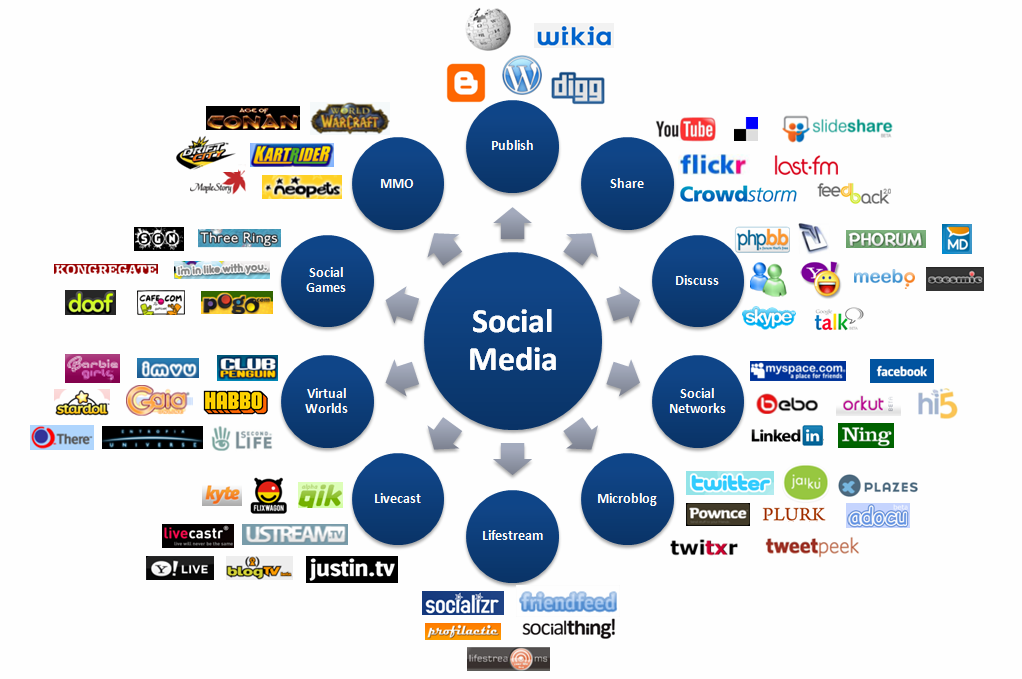
How To Use Social Platforms To Boost Reach: 6 Ways to Get More Social Media Shares for Your Blog

We are used to observing social media sharing on a routine basis; as soon as we connect to the internet and login to our social media accounts we see likes, tweets and pins. These social media platforms are great ways to expand the reach and share content across the digital border. In the digital world of businesses, it is rightly said that “Content is KING.” However, what I believe, whether the Content is King or “Jack of All Spades,” it must be truly optimized for reaching your audience via effective social sharing.


social-share


Here are 6 ways to get more social media shares for your blog.


1) Use floating social bookmarking widget to increase the shares. The sharing bar keeps moving when a person scrolls down the post.


2) You can use two or more headlines (aka double-whammy headlines) for the post to grab attention of the readers. Much like the approach we use in this blog.


a) How to use social platforms to boost the reach


b) 6 ways to get more social media shares for your blog


3) Reframe the content each time. Do it by posting a part of a blog with an image and tag the link of the whole blog in the end. For instance, you have seen many articles and blogs saying Click here to read full article or See more.


4) Repost your content after a specific interval of time such as 3 months or 6 months to get it noticed by new followers.


5) Use Popup to encourage users share your blog.


6) Last in sequence, but not in importance. Make sure your sharing button is not hidden or dead and it is always prominent at the eye-catching location.


Do you have more ideas to increase the social sharing? Let us know your experience in the comment box…


How To Use Social Platforms To Boost Reach: 6 Ways to Get More Social Media Shares for Your Blog

Friday, June 06, 2014

Are powerful Brand Mantras really helping increase Brand Equity?

The answer is straightforward; YES, they can magically increase the brand equity and its vital components such as brand awareness, brand resonance, brand perceived quality, and brand loyalty. Brand Mantras are 3-5 small word phrases (not a Tagline or Slogan) that confine the overwhelming promise and essence of the brand and its values.


The term Brand Mantra was initially coined by an American advertising executive, Scott Bedbury, former Nike and Starbucks marketing specialist. It encapsulates the point-of-differences (PODs), point-of-parities (POPs), and the competitive frame of reference into one brand idea. Fundamentally, the brand mantra is an imperative part when marketers design the strategy to position their brand. Great brand mantras can effectively position the brand in prospective buyers, creating highly perceived overall value of the brand.


Mercedes - "Quality and Prestige" Mercedes – “Quality and Prestige”


According to Scott Bedbury, he invented this term during his tenure in Nike, giving probably the best brand mantra ever for Nike, i.e. “Authentic Athletic Performance.” Remember that brand mantra is something different from slogans and taglines, because Nike’s slogan or tagline is what everybody knows, “Just do it.”


Actually, marketers derive taglines from brand mantras and they serve as a critical building block not only for the brand tagline, but for the complete brand equity or organization itself. When brainstorming mantras, marketers should focus on their core values, vision, mission and the corporate culture of the organization, without compromising on the brand positioning aspect as well. Your brand and your values should incorporate with each other. If there is something tricky between these two elements, then on off the chance that you’re on wrong track and your customers might perceive the branding as negative. Some people also describe brand mantras as the DNA of the organization that can effectively help in decision making process for branding strategies and user expectations.


In my experience, creating great brand mantra could help you hit the targeted audience smoothly in positioning world of brands. The mantra is an emotional attachment of a brand that let people knows how uniquely it will benefit them and how they feel using the certain branded product. So you can say that powerful “Brand Mantra” not only provides the brand positioning and brand image, also helps decide the prospect of the brand and organization.


Are powerful Brand Mantras really helping increase Brand Equity?

Wednesday, June 04, 2014

Importance of Business Process Outsourcing

Before going into an in-depth detail about outsourcing, let’s clear it here that the concept of outsourcing is not new at all, but the term dates back to the 1970s, when enterprises started outsourcing some subordinate processes of their businesses to outside forces.


Did outsourcing work well at that time? The answer is yes, it did well, and the practice of outsourcing started getting popular across boundaries. With the passage of time and success stories of outsourced business processes, companies got into the culture of outsourcing major parts of their business processes. Today, it can be easily noted that big corporations as well as mid-level companies outsource 50% to 60% of their business content to outside firms.


Outsourcing


It is worth-mentioning that most of the large organizations outsource half of their IT operations, while some other prefer outsourcing their all back office operations including IT, HR and accounts. Chances are in the near future all business functions would be outsourced because currently companies are outsourcing different horizontal and vertical business units. The cross functional approach adopted to follow a process horizontally across a company is called as Business Process Outsourcing (BPO).


With the emerging trend of business process outsourcing, it is no more only a method of sharing your responsibilities with outside sources, but it has become a strategic move. Big organizations do not even hesitate quoting business process outsourcing as the secret behind their business success.


How BPO Contributes in the Success of Company?


The answer may need long detail, logical back up or evidence; while keeping it short and simple it can be noted that there are two major parts of every organization namely, administrative functions and strategic planning.


Administration functions contribute in running, monitoring and management of all business units. Be it finance and accounts, human resources function, production team or IT support all these are part of administrative functions. Tough schedules, project deadlines and meeting stress and all other business functions, take focus away from strategic planning that result in static business position. It means that a business keeps on running smoothly, but it does not show growth because companies lack focus on strategic planning.


Secret behind success of most big corporations is that they outsource all efficient processes and keep core focus on strategic planning for the company. They keep on expanding their visions and targeted goals and then formulate strategies to achieve those goals and keep growing in the competition.


The JLC Group provides diverse service portfolio for business outsourcing, including but not limited to:


1)      Marketing & Corporate Sales Strategy


2)      Brand Awareness


3)      Public Relation Consultancy


4)      Social Media Campaigns


5)      Corporate Sponsorships


6)      Competitive Analysis


7)      Strategic Partnerships


8)       Corporate Web Design and Development and more


Importance of Business Process Outsourcing

Learning is Proportional to the Accountability

New research proves that people only confront failures when they cannot find ways to attribute failure with something – or someone – else.  But when we avoid accountability, we detach ourselves from learning.


In the recent working paper of HBS (Harvard Business School), researchers identify, “How internal attribution and ambiguity of responsibility affect learning from failure.” Almost every one of us have had heard many quotes from intellects, emphasizing on the connection between “Success & Failure,” “Failure & Learning”, and “Experience & Failure.”


Learn More - Earn More


For instance, take a look on Bill Gates’ famous saying, “It’s fine to celebrate success, but it is more important to heed the lessons of failure.”


To explain why most of the saints, scholars, and other super minds always link success with failure is straightforward, because they never found a way to success other than failed experiences. In other words, they got learning from failures and sooner or later, make themselves accountable to combat failure without giving excuses and reasoning or blaming external circumstances.


But in some cases, where a person is unclear if he/she is directly responsible for the failure then there is chance that a person would not attribute the failure internally and ultimately less likely to learn from failure. The dilemma of real world is that we cannot easily decrease the ambiguity of responsibility when it comes to failure because most of our assignments and projects involve team players and colleagues as well.


So is there any way managers can encourage learning without accusing others of responsibility?


One of the authors of working HBS paper, Christopher G. Myers, gives some recommendations;


1)      Remove barriers creating ambiguity in the priority.


2)      Carefully designing the job roles, scope of responsibilities and reporting structure.


3)      Creating a psychological safe culture within the organization, where employees are encouraged to accept and learn from failure.


4)      Make a norm of experiencing new tasks as the challenging opportunity for learning process, rather than as a threatening stress.


5)      Analyzing root-cause of the failure without penalizing anyone when team fails, this can increase the thirst for learning among employees.


In my experience, learning is more about failure than success. When a person fails, his curiosity for success increases but the person should be sincerely curious about his work and life. In the end, all we need is to prepare ourselves to be accountable and responsible for the particular failed attempt rather than pinpointing others and uncontrollable external factors.


How beautifully it is summarized by Zig Zigler in just once sentence,


“If you learn from defeat, you haven’t really lost.”


Learning is Proportional to the Accountability

Monday, June 02, 2014

Palantir: Goes Boldy Where Marketers Had Only Dreamed Of

As profiled by the most recent edition of the Sunday New York Times, 10-yr old Palantir Technologies, a software company whose investors include the US Central Intelligence Agency-backed venture capital firm In-Q-Tel, Palantir helps clients unlock secrets. In the world of marketing, and more specifically, within the context of marketers who now foam at the mouth when provided tools to extrapolate insight from tons of metadata, for those Mad Men (and women) intrigued by the rhetorical question”What’s Next?” within the framework of marketing technology and applications, Palantir is very possibly the next generation’s Google Inc; irrespective of the assortment of privacy-related concerns that go hand in hand with the company’s secret sauces.


An audacious call perhaps, but this blogger was [presciently] one of the very earliest proponents of Google search technology in the late 1990′s, well before this company went public in 2004. It has forever since become a ubiquitous tool for research, and of course, a Wall Street darling. Now this blogger is banging the table and shouting “Pay Attention to Palantir.”


 Palantir’s offices in Palo Alto, Calif., house computer monitors galore, not to mention more unusual desk décor, a cot and games. Credit Peter DaSilva for The New York Times Palantir’s offices in Palo Alto, Calif., house computer monitors galore, not to mention more unusual desk décor, a cot and games. Credit Peter DaSilva for The New York Times


Though Palantir’s CEO Alex Karp says he eschews the notion of monetizing this business enterprise via a public stock offering (much to the chagrin of its early and latter stage venture investors), the company’s list of corporate clients now extends across every industry, including the world’s biggest financial companies, manufacturers, and healthcare concerns. For those using Palantir tools to analyze buying decisions, trends and for projecting just about anything a business (or government) would want to forecast with reliability, Palantir software is seemingly light years ahead of Google and the assortment of other tech czars focused on number crunching and data analysis.


For the full story from the NY Times, please click here.


Palantir: Goes Boldy Where Marketers Had Only Dreamed Of

Saturday, May 31, 2014

Social Media, Meet Financial Services; Blog, Tweet and Link-In To Be a Thought-Leader

Norb Vonnegut Norb Vonnegut


Norb Vonnegut, author extraordinaire of Wall Street crime novels (no surprise given his last name is synonymous with literary largesse) and a fellow who is fluent in the world of financial services wrote a compelling column for the Wall Street Journal this week in which he framed the relevance and import of social media within the world of financial services.


Before offering a synopsis of the column and Norb’s “take-aways”, in the spirit of Wall Street’s emphasis on “full-disclosure”, I’ve broken bread with Norb on more than one occasion, initially in connection with my inviting him to lunch with the goal of enticing him to collaborate on a crime story that I had penned. I think Norb is not just a great fellow, but he’s also a smart and thoughtful guy. I also happen to be a fan of his books, which tend to focus on fictional financial malfeasance; necessarily inspired by the ample supply of real-life stories emanating from the bowels of Wall Street.


Below extract from Norb’s WSJ column starts with “It’s not clear to me how anybody can use social media to build a financial advisory business, especially in the high-net-worth sector. Referrals, targeted cold calls, expert speaking engagements–that’s where the action is.


But I might be wrong.”


Norb then points to the reason why he might be wrong, and along the way, two particularly observations jumped off the page: the import of thought-leadership techniques (“newsjacking” 3rd party content to help emphasize a point..one of this writer’s favorite tactics), and the most important form of communication: listening!


“..Sebastian Dovey, whose firm Scorpio Partnership recently surveyed 3,477 wealthy people about how they use the Internet, says, “The wealthier the individual, the more connected they are digitally.”


Determined to keep an open mind, I recently spoke with Michael Zeuner of WE Family Offices. His firm manages about $2.7 billion in assets for wealthy families. Mr. Zeuner is bullish about social media, though not fanatical.


He regards it as a channel, one of several, to teach people and provide transparency about the markets because “the playing field has not been leveled between advisers and investors”–that is, advisers usually have information most other people don’t. When it comes to building long-term trust with wealthy clients, “caveat emptor” just doesn’t work.


We discussed Twitter TWTR -4.59% and LinkedIn in detail. We skimmed over Facebook, FB -0.83% which Mr. Zeuner sees as more of a “personal” site. And we did not spend any time on Google+ or YouTube.


Twitter: I asked the obvious question. How can you educate investors in 140 characters or less about the Byzantine securities and the assorted biohazards that crawl out of Wall Street’s trading floors?


Mr. Zeuner said he curates thought leadership. Using his personal handle, he primarily tweets third-party content that contributes to capital markets transparency and investor expertise. ….


I get that. It’s the right way to tweet. The strategy focuses on value, not volume. What I didn’t expect was Mr. Zeuner’s follow-up. He emphasized Twitter is a great place “to listen.”


The full WSJ column is available via this link.


Social Media, Meet Financial Services; Blog, Tweet and Link-In To Be a Thought-Leader

Friday, May 30, 2014

GROWTH HACKING: A NEW SUCCESS CODE CRACKER FOR ONLINE MARKETERS

The term GROWTH HACKING was first coined in 2010 by Sean Ellis, CEO and Founder of Qualaroo and GrowthHackers.com. It now became a marketing technique, often used by growth hackers to blend the creativity, analytics, and social metrics to bring in high sales and expand online marketing exposure.


The emergence of companies like Dropbox (file-sharing service website) and Airbnb (home renting service website) demonstrate the significant shift of online business growth. Wall Street Journal reporters highlighted that both the companies spent almost nothing on online advertisement, but they still managed to drive a lot of traffic on their respective websites. So, what’s the secret behind their dramatic success? The answer is Growth Hacking.


Growth Hacking How Growth Hacking helps boost businesses?


Talking about the Dropbox, instead of using traditional advertising techniques – marketers designed a marketing referral program that facilitated the users get extra storage on inviting a new member to the site. On the other side, Airbnb opted for multi-posting method of promotion, unlike traditional advertising, they allowed their existing clientele on Craiglist.com to cross-post the listings of featured post that brought heavy traffic back to Airbnb.com.


The above two strategies proved to be excellent growth-hacking marketing tactics. Unfortunately, there is no rule of thumb for any business to follow certain growth-hacking tactics as Ivan Kirigin, a former product manager at Dropbox, said, “Focus on a goal and run tests to find what will help achieve that goal”.


Growth hacking is now becoming one of the best podiums for online marketing. Gone are the days, when traditional marketing helps you stand out in the competition. Another great example of Growth-hacking success is Facebook.com, likewise the former software engineer of Facebook, Mr. Kirigin, said, “Facebook found out that users are much more likely to stay on the site if they acquired at least seven friends in 10 days”. Based on the fact, Facebook uses algorithms to suggest “people you may know” and sends emails prompting users to add their friends.


Every day, we witness growth hacking in the digital world, when suddenly a joke, picture, video, website, or business idea goes viral on the internet even in microseconds and people start owning the idea before their peers or friends do. Growth hacking is all about the idea that works like a magic bullet to hit the target audience and create a uniform and passive perception.


GROWTH HACKING: A NEW SUCCESS CODE CRACKER FOR ONLINE MARKETERS

Thursday, May 29, 2014

Telling Your Story: Brand Strategy 6 Words at a Time

Story-telling is one of the most effective way for brands to extend their value proposition, after all, the impact of story-telling is part and parcel to every culture since the beginning of time. Whether in metaphor, anecdotal, or short-form narrative, story-telling sells.


Don’t just believe us, NYT’s Stuart Elliott visited this advertising industry topic in a recent column profiling Ritz-Carlton’s latest campaign courtesy of Team One Advertising.


ritz“..A chain of luxury hotels and resorts is borrowing from an Internet meme to extend a marketing effort that celebrates the accumulation of experiences and memories rather than the trappings of wealth.


The campaign, scheduled to begin this week, is for the Ritz-Carlton Hotel Company division of Marriott International. It is intended to expand upon ads that Ritz-Carlton and its agency, Team One Advertising, introduced in 2011 with the theme “Let us stay with you.”


The new campaign, also by Team One, is called “Six-word wows,” after a popular online creative exercise known as six-word memoirs and six-word stories. All those efforts at producing among the shortest of short stories — “flash fiction,” as some describe it — are inspired by a moment in literary lore when, the legend goes, Ernest Hemingway was challenged to write a story in six words and replied, “For sale: baby shoes, never worn.”


The “wow” in the Ritz-Carlton campaign invokes the company’s parlance when referring to a goal to “wow” its guests. The capsule tales are taken from anecdotes that are shared two ways….”


For the full story (its a great read and very inspiring!), please visit the NYT story


Telling Your Story: Brand Strategy 6 Words at a Time

Wednesday, May 28, 2014

Financial Services Marketing: New Business Intelligence Portal Aims At Global Investment Crowd

BrokerDealer.com Launches Broker-Dealer Business Intelligence Portal for Global Bankers, Qualified Investors and Entrepreneurs Raising Capital


For Immediate Release


New York, NY—May 28–Broker Dealer LLC, a provider of financial industry corporate intelligence and qualified investor databases, announced today the launch of a new, broker dealer web-based portal that incorporates 100,000 broker dealer, investment banker and securities dealer profiles as well as upwards of 20,000 qualified investors extending across 35 major countries, including capital formation brokers and deal investors based in North America, EU, Eastern Europe, China, Pacific Rim, the Middle East and Africa.


Apart from detailed lead generation and decision-maker metadata, the company’s platform incorporates a range of social media applications, including a “deal room” forum that enable capital-seeking business enterprises to share their business plans with professional deal-sourcing bankers and private funding sources that include qualified angel investors, hedge fund managers, private equity and venture capital firms and family offices seeking investment opportunities. The firm’s investor database is available for free and is accessible via http://BrokerDealer.com.


According to Jay Berkman, head of the financial services practice group for marketing consultant The JLC Group, “Brokerdealer.com could be the right domain for this new player in the business intelligence space when considering the evolution of the JOBS Act in the U.S., the global embracement of crowd-funding in advance of traditional investment bank capital-raising techniques and the depth of global contact information available within the brokerdealer.com database.” Added Berkman, “The social networking function within its subscriber-based platform is compelling, and it’s advertising-free.”


Brokerdealer.com was designed to help connect companies seeking broker dealers, funding, underwriting, or lead manager assistance for debt and equity offerings. The platform was created out of the need to give entrepreneurs, investors and data providers the ability to connect with one another. The broker dealer databases found on brokerdealer.com includes information such as broker dealer’s name, address, phone, URL/emails, and most important, a description of what the broker-dealer actually performs. If a company is seeking to raise capital for a real estate project the user will be able to filter the broker dealer databases – on a global scale – and reach out.


Brokerdealer.com anticipates adding 45 additional securities dealer and broker directories, giving network members of brokerdealer.com upwards of 75 of the world’s most popular broker dealer lists.


For Additional Info


Corporate Communications


Broker Dealer LLC


30 Wall Street

Suite 800

New York, NY 10005

Tel: (212) 380-1371


Email: brokerdealer@brokerdealer.com


Twitter: @broker_dealer


Financial Services Marketing: New Business Intelligence Portal Aims At Global Investment Crowd

New Trend: Social Media Savvy Youngsters Fill Reverse-Mentor Roles To Corporate Exec GreyBeards

You’re a corporate titan, and your marketing execs are pushing you to be more proactive in your use of social media, but you still don’t get it..Well, as reported by Sue Shellenbarger in today’s WSJ Home & Digital column, the new trend in corporate mentoring is finding youngsters in corporate settings taking on a reverse role; they’re now doing the mentoring. Whether its best practices when it comes to Twitter, Blogging, the use of Linkedin or Facebook, we’re reminded of the adage, “..out of the mouths of babes..”  The JLC Group endorses this new movement! (P.S. We’re also looking for interns to mentor our corporate clients!!!)


social-media-landscape“There is a growing digital divide in workplaces—between twentysomethings with social-media savvy and tech-impaired older managers. To address it, more companies are trying reverse mentoring, pairing young employees with older colleagues to work on tech skills.


The practice “is up quite a bit in the last three or four years,” says Didier Bonnet, a global practice leader in London for Capgemini Consulting. “The main aim is to raise the digital IQ of business leaders in the firms.”


The pair-ups don’t always work, Dr. Bonnet says. They are often intimidating to young mentors and awkward for older colleagues, who may be embarrassed to reveal how little they know. Clear goals, good chemistry, a time commitment and an open-minded attitude among senior executives raise the odds of success, he says…”


For the full story from the WSJ, please click here.


New Trend: Social Media Savvy Youngsters Fill Reverse-Mentor Roles To Corporate Exec GreyBeards

Tuesday, May 27, 2014

Crowdsourcing and Crowdfunding: Connecting The Tag Line to the Bottom Line

Extract courtesy of WSJ CIO Journal May 27


“..The goal of crowdsourcing is to not only reduce costs—compared to turning to a traditional consulting firm, for instance—but also to connect quickly with specialists and scale resources up or down as workloads change….


….Companies that need software developed in a short timeframe might go to technical crowdsourcing sites such as Assembly or uTest. Marketers needing a tagline for next month’s promotion can turn to Crowdflower or Trada, among many others….


Types of Crowdsourcing


Tongal Crowdsourcing Tongal Crowdsourcing


There are a few different models for buying and using crowdsourcing services. In some cases, companies don’t pay a dime until a desired result is achieved. Colgate Speed Stick conducted a crowdsourcing contest on Tongal to spark a Super Bowl ad for the cut-rate price of $17,000. Platforms also incorporate bidding systems where freelancers can present a proposal and price for a project. Then there are transactional-based projects with large volumes of people working on your behalf. A consumer products company could pay small fees to thousands of individuals for testing products or auditing their stock in stores, using mobile apps to report results. The beauty of crowdsourcing is that it takes the hassles of talent search and management out of a company’s hands…


Crowdfunding. A hot topic among the investment community is crowdfunding, in which entrepreneurs ask for capital from the crowd to develop ideas, products, and businesses. Indiegogo, Kickstarter, and OurCrowd are three of many platforms in this space. Israel-based OurCrowd  has helped 33 companies raise a collective $35 million; OurCrowd investors receive equity stakes in the companies they fund.


For the full WSJ CIO / Deloitte article, please click here.


Crowdsourcing and Crowdfunding: Connecting The Tag Line to the Bottom Line