Saturday, May 31, 2014

Social Media, Meet Financial Services; Blog, Tweet and Link-In To Be a Thought-Leader

Norb Vonnegut Norb Vonnegut


Norb Vonnegut, author extraordinaire of Wall Street crime novels (no surprise given his last name is synonymous with literary largesse) and a fellow who is fluent in the world of financial services wrote a compelling column for the Wall Street Journal this week in which he framed the relevance and import of social media within the world of financial services.


Before offering a synopsis of the column and Norb’s “take-aways”, in the spirit of Wall Street’s emphasis on “full-disclosure”, I’ve broken bread with Norb on more than one occasion, initially in connection with my inviting him to lunch with the goal of enticing him to collaborate on a crime story that I had penned. I think Norb is not just a great fellow, but he’s also a smart and thoughtful guy. I also happen to be a fan of his books, which tend to focus on fictional financial malfeasance; necessarily inspired by the ample supply of real-life stories emanating from the bowels of Wall Street.


Below extract from Norb’s WSJ column starts with “It’s not clear to me how anybody can use social media to build a financial advisory business, especially in the high-net-worth sector. Referrals, targeted cold calls, expert speaking engagements–that’s where the action is.


But I might be wrong.”


Norb then points to the reason why he might be wrong, and along the way, two particularly observations jumped off the page: the import of thought-leadership techniques (“newsjacking” 3rd party content to help emphasize a point..one of this writer’s favorite tactics), and the most important form of communication: listening!


“..Sebastian Dovey, whose firm Scorpio Partnership recently surveyed 3,477 wealthy people about how they use the Internet, says, “The wealthier the individual, the more connected they are digitally.”


Determined to keep an open mind, I recently spoke with Michael Zeuner of WE Family Offices. His firm manages about $2.7 billion in assets for wealthy families. Mr. Zeuner is bullish about social media, though not fanatical.


He regards it as a channel, one of several, to teach people and provide transparency about the markets because “the playing field has not been leveled between advisers and investors”–that is, advisers usually have information most other people don’t. When it comes to building long-term trust with wealthy clients, “caveat emptor” just doesn’t work.


We discussed Twitter TWTR -4.59% and LinkedIn in detail. We skimmed over Facebook, FB -0.83% which Mr. Zeuner sees as more of a “personal” site. And we did not spend any time on Google+ or YouTube.


Twitter: I asked the obvious question. How can you educate investors in 140 characters or less about the Byzantine securities and the assorted biohazards that crawl out of Wall Street’s trading floors?


Mr. Zeuner said he curates thought leadership. Using his personal handle, he primarily tweets third-party content that contributes to capital markets transparency and investor expertise. ….


I get that. It’s the right way to tweet. The strategy focuses on value, not volume. What I didn’t expect was Mr. Zeuner’s follow-up. He emphasized Twitter is a great place “to listen.”


The full WSJ column is available via this link.


Social Media, Meet Financial Services; Blog, Tweet and Link-In To Be a Thought-Leader

Friday, May 30, 2014

GROWTH HACKING: A NEW SUCCESS CODE CRACKER FOR ONLINE MARKETERS

The term GROWTH HACKING was first coined in 2010 by Sean Ellis, CEO and Founder of Qualaroo and GrowthHackers.com. It now became a marketing technique, often used by growth hackers to blend the creativity, analytics, and social metrics to bring in high sales and expand online marketing exposure.


The emergence of companies like Dropbox (file-sharing service website) and Airbnb (home renting service website) demonstrate the significant shift of online business growth. Wall Street Journal reporters highlighted that both the companies spent almost nothing on online advertisement, but they still managed to drive a lot of traffic on their respective websites. So, what’s the secret behind their dramatic success? The answer is Growth Hacking.


Growth Hacking How Growth Hacking helps boost businesses?


Talking about the Dropbox, instead of using traditional advertising techniques – marketers designed a marketing referral program that facilitated the users get extra storage on inviting a new member to the site. On the other side, Airbnb opted for multi-posting method of promotion, unlike traditional advertising, they allowed their existing clientele on Craiglist.com to cross-post the listings of featured post that brought heavy traffic back to Airbnb.com.


The above two strategies proved to be excellent growth-hacking marketing tactics. Unfortunately, there is no rule of thumb for any business to follow certain growth-hacking tactics as Ivan Kirigin, a former product manager at Dropbox, said, “Focus on a goal and run tests to find what will help achieve that goal”.


Growth hacking is now becoming one of the best podiums for online marketing. Gone are the days, when traditional marketing helps you stand out in the competition. Another great example of Growth-hacking success is Facebook.com, likewise the former software engineer of Facebook, Mr. Kirigin, said, “Facebook found out that users are much more likely to stay on the site if they acquired at least seven friends in 10 days”. Based on the fact, Facebook uses algorithms to suggest “people you may know” and sends emails prompting users to add their friends.


Every day, we witness growth hacking in the digital world, when suddenly a joke, picture, video, website, or business idea goes viral on the internet even in microseconds and people start owning the idea before their peers or friends do. Growth hacking is all about the idea that works like a magic bullet to hit the target audience and create a uniform and passive perception.


GROWTH HACKING: A NEW SUCCESS CODE CRACKER FOR ONLINE MARKETERS

Thursday, May 29, 2014

Telling Your Story: Brand Strategy 6 Words at a Time

Story-telling is one of the most effective way for brands to extend their value proposition, after all, the impact of story-telling is part and parcel to every culture since the beginning of time. Whether in metaphor, anecdotal, or short-form narrative, story-telling sells.


Don’t just believe us, NYT’s Stuart Elliott visited this advertising industry topic in a recent column profiling Ritz-Carlton’s latest campaign courtesy of Team One Advertising.


ritz“..A chain of luxury hotels and resorts is borrowing from an Internet meme to extend a marketing effort that celebrates the accumulation of experiences and memories rather than the trappings of wealth.


The campaign, scheduled to begin this week, is for the Ritz-Carlton Hotel Company division of Marriott International. It is intended to expand upon ads that Ritz-Carlton and its agency, Team One Advertising, introduced in 2011 with the theme “Let us stay with you.”


The new campaign, also by Team One, is called “Six-word wows,” after a popular online creative exercise known as six-word memoirs and six-word stories. All those efforts at producing among the shortest of short stories — “flash fiction,” as some describe it — are inspired by a moment in literary lore when, the legend goes, Ernest Hemingway was challenged to write a story in six words and replied, “For sale: baby shoes, never worn.”


The “wow” in the Ritz-Carlton campaign invokes the company’s parlance when referring to a goal to “wow” its guests. The capsule tales are taken from anecdotes that are shared two ways….”


For the full story (its a great read and very inspiring!), please visit the NYT story


Telling Your Story: Brand Strategy 6 Words at a Time

Wednesday, May 28, 2014

Financial Services Marketing: New Business Intelligence Portal Aims At Global Investment Crowd

BrokerDealer.com Launches Broker-Dealer Business Intelligence Portal for Global Bankers, Qualified Investors and Entrepreneurs Raising Capital


For Immediate Release


New York, NY—May 28–Broker Dealer LLC, a provider of financial industry corporate intelligence and qualified investor databases, announced today the launch of a new, broker dealer web-based portal that incorporates 100,000 broker dealer, investment banker and securities dealer profiles as well as upwards of 20,000 qualified investors extending across 35 major countries, including capital formation brokers and deal investors based in North America, EU, Eastern Europe, China, Pacific Rim, the Middle East and Africa.


Apart from detailed lead generation and decision-maker metadata, the company’s platform incorporates a range of social media applications, including a “deal room” forum that enable capital-seeking business enterprises to share their business plans with professional deal-sourcing bankers and private funding sources that include qualified angel investors, hedge fund managers, private equity and venture capital firms and family offices seeking investment opportunities. The firm’s investor database is available for free and is accessible via http://BrokerDealer.com.


According to Jay Berkman, head of the financial services practice group for marketing consultant The JLC Group, “Brokerdealer.com could be the right domain for this new player in the business intelligence space when considering the evolution of the JOBS Act in the U.S., the global embracement of crowd-funding in advance of traditional investment bank capital-raising techniques and the depth of global contact information available within the brokerdealer.com database.” Added Berkman, “The social networking function within its subscriber-based platform is compelling, and it’s advertising-free.”


Brokerdealer.com was designed to help connect companies seeking broker dealers, funding, underwriting, or lead manager assistance for debt and equity offerings. The platform was created out of the need to give entrepreneurs, investors and data providers the ability to connect with one another. The broker dealer databases found on brokerdealer.com includes information such as broker dealer’s name, address, phone, URL/emails, and most important, a description of what the broker-dealer actually performs. If a company is seeking to raise capital for a real estate project the user will be able to filter the broker dealer databases – on a global scale – and reach out.


Brokerdealer.com anticipates adding 45 additional securities dealer and broker directories, giving network members of brokerdealer.com upwards of 75 of the world’s most popular broker dealer lists.


For Additional Info


Corporate Communications


Broker Dealer LLC


30 Wall Street

Suite 800

New York, NY 10005

Tel: (212) 380-1371


Email: brokerdealer@brokerdealer.com


Twitter: @broker_dealer


Financial Services Marketing: New Business Intelligence Portal Aims At Global Investment Crowd

New Trend: Social Media Savvy Youngsters Fill Reverse-Mentor Roles To Corporate Exec GreyBeards

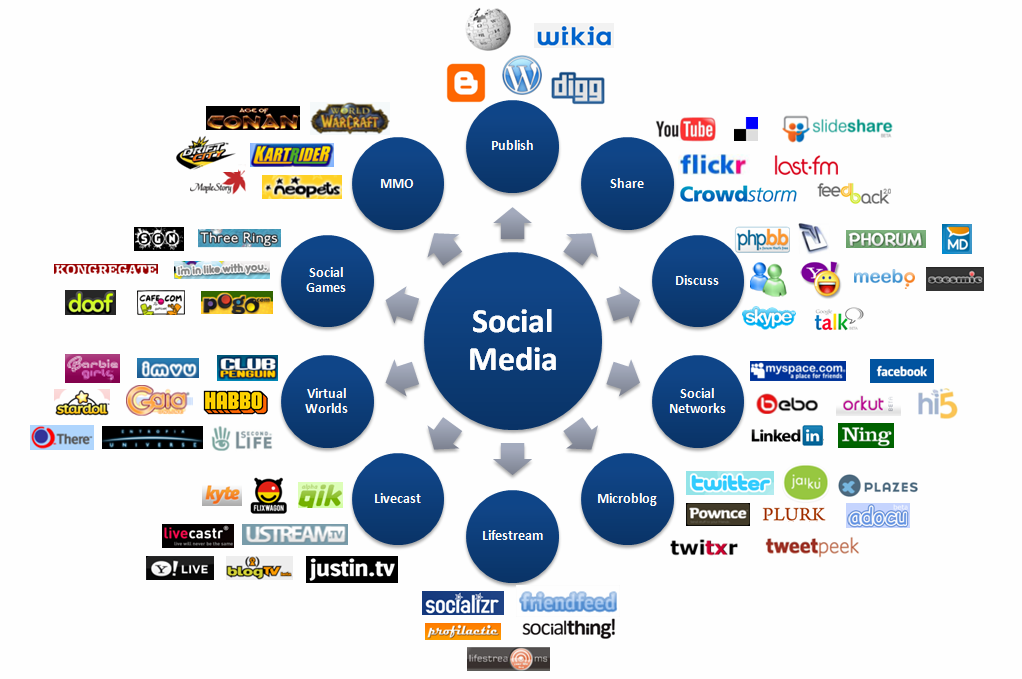
You’re a corporate titan, and your marketing execs are pushing you to be more proactive in your use of social media, but you still don’t get it..Well, as reported by Sue Shellenbarger in today’s WSJ Home & Digital column, the new trend in corporate mentoring is finding youngsters in corporate settings taking on a reverse role; they’re now doing the mentoring. Whether its best practices when it comes to Twitter, Blogging, the use of Linkedin or Facebook, we’re reminded of the adage, “..out of the mouths of babes..”  The JLC Group endorses this new movement! (P.S. We’re also looking for interns to mentor our corporate clients!!!)


social-media-landscape“There is a growing digital divide in workplaces—between twentysomethings with social-media savvy and tech-impaired older managers. To address it, more companies are trying reverse mentoring, pairing young employees with older colleagues to work on tech skills.


The practice “is up quite a bit in the last three or four years,” says Didier Bonnet, a global practice leader in London for Capgemini Consulting. “The main aim is to raise the digital IQ of business leaders in the firms.”


The pair-ups don’t always work, Dr. Bonnet says. They are often intimidating to young mentors and awkward for older colleagues, who may be embarrassed to reveal how little they know. Clear goals, good chemistry, a time commitment and an open-minded attitude among senior executives raise the odds of success, he says…”


For the full story from the WSJ, please click here.


New Trend: Social Media Savvy Youngsters Fill Reverse-Mentor Roles To Corporate Exec GreyBeards

Tuesday, May 27, 2014

Crowdsourcing and Crowdfunding: Connecting The Tag Line to the Bottom Line

Extract courtesy of WSJ CIO Journal May 27


“..The goal of crowdsourcing is to not only reduce costs—compared to turning to a traditional consulting firm, for instance—but also to connect quickly with specialists and scale resources up or down as workloads change….


….Companies that need software developed in a short timeframe might go to technical crowdsourcing sites such as Assembly or uTest. Marketers needing a tagline for next month’s promotion can turn to Crowdflower or Trada, among many others….


Types of Crowdsourcing


Tongal Crowdsourcing Tongal Crowdsourcing


There are a few different models for buying and using crowdsourcing services. In some cases, companies don’t pay a dime until a desired result is achieved. Colgate Speed Stick conducted a crowdsourcing contest on Tongal to spark a Super Bowl ad for the cut-rate price of $17,000. Platforms also incorporate bidding systems where freelancers can present a proposal and price for a project. Then there are transactional-based projects with large volumes of people working on your behalf. A consumer products company could pay small fees to thousands of individuals for testing products or auditing their stock in stores, using mobile apps to report results. The beauty of crowdsourcing is that it takes the hassles of talent search and management out of a company’s hands…


Crowdfunding. A hot topic among the investment community is crowdfunding, in which entrepreneurs ask for capital from the crowd to develop ideas, products, and businesses. Indiegogo, Kickstarter, and OurCrowd are three of many platforms in this space. Israel-based OurCrowd  has helped 33 companies raise a collective $35 million; OurCrowd investors receive equity stakes in the companies they fund.


For the full WSJ CIO / Deloitte article, please click here.


Crowdsourcing and Crowdfunding: Connecting The Tag Line to the Bottom Line